Academic life has a wardrobe problem that most professions do not. In a single week, a senior professor might teach an undergraduate seminar, sit on a hiring committee, deliver a keynote at an international conference, meet with a dean or provost, appear on a panel, examine a doctoral candidate, and attend a formal college dinner. Each of these settings has its own conventions, none of them are quite alike, and moving between them fluently is one of the small but genuinely useful skills of a serious academic career.
This guide is for professors and senior academics who have reached the point where what they wear has started to matter. Full professors, department chairs, deans, endowed chairs, academic leaders and anyone whose public visibility as a scholar has begun to expand beyond the campus itself. A considered wardrobe for the range of settings academic life demands is not vanity. It is a practical tool that reinforces authority quietly across a career built on the credibility of ideas.
Academic culture has an old and somewhat mixed relationship with wardrobe. On one hand, universities value intellectual seriousness over presentation and often signal contempt for the corporate world’s obsession with the suit. On the other, academic institutions retain some of the most formal ceremonial dress codes anywhere in professional life, from graduation robes to the specific etiquette of college dinners and formal collegiate settings. A professor has to navigate both traditions, sometimes on the same day.
Layered on top of this is the reality that the visibility of senior academics has grown considerably. Keynote conferences are livestreamed, professors give TED talks and appear in mainstream media, university leaders serve on public boards, and academic reputations are built as much through public communication as through internal scholarly work. The wardrobe that used to belong to the seminar room now has to cover a much wider set of settings.
The Teaching Wardrobe
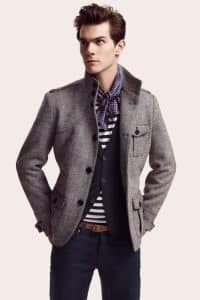
For most days of teaching, meeting with students, and internal departmental work, a well cut blazer or sport coat over tailored trousers is the sensible foundation. This reads as considered and appropriate to academic life without the full weight of a suit, which can feel out of place in a classroom. A quality shirt, well maintained shoes and a small selection of ties for the days when they matter round out the daily working wardrobe.
The Faculty Meeting and Committee Wardrobe
Departmental meetings, hiring committees, tenure reviews and interactions with academic leadership sit slightly above the teaching wardrobe in formality. A well made jacket-and-trousers combination, or a full suit in a less formal fabric such as a soft tweed or textured wool, works well for these settings. The look should read as senior and considered without being showy.
The Conference and Keynote Wardrobe
Academic conferences are where the wardrobe becomes visibly important. A professor delivering a keynote is being photographed, filmed, and seen by peers from institutions across the world. This is where a proper bespoke suit earns its place. Navy or mid grey in quality worsted wool, cut classically, is the safe and correct choice for almost any keynote or panel appearance. The suit should reinforce the authority the professor has earned through their scholarship, quietly and consistently.
The Formal Academic Wardrobe
College dinners, honorary degree ceremonies, ceremonial university occasions, and the small number of black-tie academic events call for a genuinely formal wardrobe. A well made bespoke tuxedo, quality dress shirt, and correct accessories serve for years of formal academic occasions. For institutions with ceremonial dress codes (particularly older universities in the UK, Europe and parts of the US), the tuxedo is the base layer that goes under the academic robes.
Explore our range of custom suits to see the fabrics and construction options we work with for academic clients across the range of settings university life involves.
Academic audiences read details carefully. The state of your shoes, the fit of your collar, the drape of your jacket. Professors are trained observers of small things, and the visual details of a colleague or speaker are being read alongside their arguments. A few points that make a real difference in the academic setting.
Senior professors and academic leaders now find themselves in genuinely public roles more often than in previous generations. Op-eds in national newspapers, television and radio appearances on their areas of expertise, expert testimony to legislative committees, speaking at industry events, and the increasing crossover between academic research and public policy communication. In all of these settings, the wardrobe becomes part of the credibility the academic brings to the conversation.
This is not a departure from academic values. It is the recognition that when a professor’s research or expertise reaches a wider audience, the visual presentation supports the substance of what they are saying. A professor being interviewed on national television in a well cut bespoke suit reads as credible in a way that the same professor in a poorly fitting off-the-rack suit does not.
For senior academics whose work has grown into a public role, working with a bespoke tailor who understands the specific range of academic settings, from seminar room to television studio, is one of the more useful long-term relationships to establish.
A senior academic’s wardrobe does not need to arrive all at once. A sensible starting foundation is one navy suit for conferences and formal work, one mid grey suit for daytime professional settings, a well cut blazer for teaching and committee days, a rotation of quality shirts and a small set of accessories. This covers most of academic life. Additional pieces, a tuxedo for formal ceremonial occasions, and more textured or specialised pieces can follow over time as the wardrobe matures alongside the career.
Exclusive Tailor is one of the original bespoke tailoring houses of Patong, Phuket, founded by Johnny and Nitu and run as a family business ever since. Our academic clients include full professors, department chairs, deans and endowed chairs from universities across the world, many of whom first came to us during a Phuket visit and have continued the relationship through our trunk show service in their home cities. The wardrobe of a senior academic rewards a long relationship with a bespoke tailor who understands the specific range of settings university life involves, from the seminar room to the international conference stage.
If you would like to explore a wardrobe designed for the specific demands of academic life, you can book a consultation at our Patong showroom or through our contact us page if you would prefer to be fitted in your home city. Many of our academic clients build their wardrobes over multiple visits as their career and public profile evolve.
What should a professor wear to teach?
A well cut blazer or sport coat over tailored trousers, a quality shirt and well maintained shoes. This reads as considered and appropriate without the full weight of a suit, which can feel out of place in a classroom setting.
What should an academic wear to a conference?
A well made suit in navy or mid grey, in quality worsted wool, cut classically. For keynote speakers and senior participants, the conference is where a proper bespoke suit earns its place, reinforcing the authority the academic has earned through their scholarship.
Are bespoke suits worth it for professors?
For senior academics whose work involves public speaking, conferences, media appearances or ceremonial occasions, yes. A well fitted bespoke suit reinforces credibility in ways that off-the-rack tailoring cannot match, and lasts for many years of demanding academic use.
What colours are best for an academic wardrobe?
Navy for the most serious settings, mid grey for daily work, charcoal for the most formal occasions. Brown tweeds and earth tones are traditionally acceptable in academic settings in a way they often are not in corporate ones.
Do I need a tuxedo as a professor?
For senior academics at institutions with formal ceremonial traditions (particularly older universities in the UK, Europe and parts of the US), a well made bespoke tuxedo serves for years of formal college dinners, honorary degree ceremonies, and other ceremonial university occasions.
How does academic dressing differ from corporate dressing?
Academic dressing tends to allow more room for textured fabrics (tweeds, flannels, corduroys) and warmer earth tones than corporate dressing. It is also often less consistently formal, allowing jacket-and-trouser combinations where a corporate setting would call for a full suit. The formality rises for conferences, senior meetings and ceremonial occasions.


Mon-Sat 10:30 – 22:00
Sunday 16:00 – 22:00