Every lawyer wears a suit. What separates a great lawyer’s suit from a merely acceptable one is not immediately obvious to the wearer, but it is unmistakable to the audience. Judges, senior partners, opposing counsel and clients all read the suit as part of the lawyer, and the details that communicate authority quietly are different from the details that communicate mere expense. This guide breaks down what actually makes a lawyer’s suit great, so the investment made in dressing the part actually delivers the authority it is supposed to.
Law is one of the last industries where a properly worn suit remains close to universal, and where the standard of that suit is genuinely noticed. A great lawyer’s suit reinforces every other signal of preparation and seriousness. A poor lawyer’s suit undermines them. Understanding the specific elements that make a suit great is worth the attention of anyone practising at a serious level.
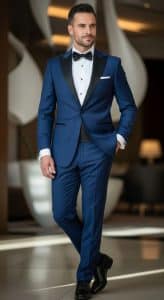
The single element that most defines a great lawyer’s suit is fit. Not close-cut fashion fit, and not the loose fit of a poorly sized garment, but the specific correct fit that follows the wearer’s body cleanly. A jacket that sits precisely on the shoulders, closes across the chest without pulling, and follows the natural line of the torso. Trousers that break gently on the shoe without pooling or riding up. This is the fit that reads as authoritative before the lawyer says anything.
Bespoke tailoring is where this fit becomes reliably achievable. Off-the-rack suits, however expensive, are cut for an average body and force compromises in the shoulders, chest, waist or seat that a bespoke garment resolves individually. For a lawyer whose entire professional presence depends on precision, the precision of the suit matters.
Quality cloth is the second defining element of a great lawyer’s suit. A quality worsted wool has a specific hand, a specific weight, and a way of catching light that a cheap fabric never has. Judges and senior partners notice this at close range, and it contributes to the impression of a lawyer who takes both their profession and their presentation seriously.
The construction of the jacket also matters. A half-canvas or full-canvas jacket drapes more elegantly and holds its shape over years of wear. Explore our custom suits to see the construction options available for lawyers who want a garment built to hold its authority through years of demanding professional use.
A great lawyer’s suit lives within a narrow but correct colour palette. This is deliberate. The suit should not draw attention away from the lawyer or the argument, and colour discipline is how that discretion is maintained.
A great lawyer’s suit has a cut that will look correct in ten years, not just today. A moderate lapel width, a natural shoulder, a jacket length that follows the body cleanly. Very slim, very short or aggressively contemporary cuts date quickly and can read as unserious in traditional legal environments. Law is a profession where reputation is built over decades, and the suit should be capable of the same longevity.
The classical silhouette is not conservative for its own sake. It is what has looked correct for a long time and will continue to look correct for a long time to come. This is exactly the visual quality a serious lawyer wants attached to their name and reputation.
A great lawyer’s suit rewards close inspection. The details that matter are not loud, but they are unmistakable to anyone who knows what they are looking at.
Working with a bespoke tailoring house means the accessories can be considered alongside the suits from the beginning, which is where the coordinated look of a serious legal wardrobe comes from.
A great lawyer’s suit is only ever as good as the shirt underneath it. A poorly fitted shirt collar undermines the whole outfit. A cheap shirt fabric looks cheap through the day. A bespoke shirt in quality cotton, fitted correctly at the collar, shoulders and cuffs, is one of the most cost-effective investments a lawyer can make in their professional appearance.
A great lawyer’s wardrobe is not defined by any single great suit. It is defined by a consistent standard across all the suits the lawyer owns. Three or four foundation suits, well made in quality cloth, worn in rotation and maintained properly, deliver the day-to-day authority a serious lawyer needs. Additional suits and speciality pieces can follow, but the base standard should be reached across the whole wardrobe rather than concentrated in one showcase suit.
Exclusive Tailor is one of the original bespoke tailoring houses of Patong, Phuket, founded by Johnny and Nitu and run as a family business ever since. Our legal clients include barristers, corporate counsel, senior partners and lawyers in private practice across the world’s major jurisdictions. Some come to Phuket specifically for the fitting experience, drawn by the value equation between Phuket bespoke and Western equivalents. Others work with us through our trunk show service in cities including London, New York and across Europe and the USA. Every lawyer’s suit we make is built to hold its authority through years of demanding professional use.
If you would like to build a wardrobe of great lawyer’s suits, you can book a consultation at our Patong showroom or through our contact us page if you would prefer to be fitted in your home city. Many of our legal clients build their wardrobes over successive visits, adding pieces as their career and practice evolve.
What makes a suit a great lawyer’s suit?
Precision fit, quality worsted wool cloth, a classic cut that ages well, restrained colour discipline, and the small construction details that reward close inspection. A great lawyer’s suit reads as considered and authoritative rather than showy.
What is the best colour for a lawyer’s suit?
Dark navy is the most versatile choice for daily legal work. Charcoal grey is slightly more formal and suits the most serious hearings and senior meetings. Mid grey is useful for less formal settings. Avoid brown for court and bright colours in any serious legal setting.
Is bespoke really necessary for a lawyer?
For the precision fit and quality signals that define a great lawyer’s suit, yes. Off-the-rack cannot deliver either at any price. For a profession where visual credibility supports every other signal, bespoke is a serious investment in professional presence.
What cut should a lawyer choose?
Classic and considered. A moderate lapel, a natural shoulder, a jacket length that follows the body cleanly. Extreme contemporary cuts date quickly and can read as unserious in traditional legal environments.
What fabric should a serious lawyer choose?
Quality worsted wool in a mid weight is the practical foundation. High-twist worsteds resist creasing for lawyers who travel. Wool and mohair blends work for slightly more formal occasions. Flannel suits cooler climates and less formal legal settings.
How many suits does a serious lawyer need?
Three or four foundation suits, well made in quality cloth and worn in rotation, cover the vast majority of what a working lawyer wears. Additional suits can be added over time. Consistency of standard across the wardrobe matters more than volume.


Mon-Sat 10:30 – 22:00
Sunday 16:00 – 22:00