Ask ten different senior executives how many suits they own and you will get answers ranging from three to thirty. The truth is that neither extreme serves the working director well. Three suits leaves the wardrobe under-rotated and gaps open when specific settings arise. Thirty suits creates a wardrobe most of which never gets worn, and the concentration of quality gets diluted across too many pieces. The sensible number for a working business leader is closer to five, and the specific five that make up a working wardrobe are the same across almost every industry.
This guide is a formula: the five suits every business leader should own, why each one earns its place, and how the five together cover almost every occasion a director faces without excess or gaps. If you are building a serious executive wardrobe from scratch, or auditing what you already own to see where the gaps are, this is the working shortlist.
Five is the number where a working executive wardrobe achieves proper rotation without becoming excessive. Two suits do not allow enough rest between wears, and wool suits genuinely benefit from resting a day between wearings for the fabric to recover its shape. Three or four leaves specific settings under-covered. Five allows a full working week of rotation while covering the specific occasions that call for different suits. Additional suits beyond five are useful for personal reasons but stop being strictly necessary for the professional wardrobe.
The five suits below are chosen to cover the specific occasions a working director actually faces. Each one earns its place by doing something the others cannot, and together they form a complete executive wardrobe.
1. The Navy Business Suit
The most versatile suit in the wardrobe and often the most worn. Dark navy in quality worsted wool, cut classically. Works across board meetings, senior client meetings, media appearances and almost every professional setting a director faces. If you were only allowed to own one bespoke suit, this would be the one. It rotates through more of the week than any other.
2. The Mid Grey Business Suit
The essential second suit that complements the navy without duplicating it. Mid grey works particularly well for daytime meetings, less formal client interactions and internal executive work. Together with the navy suit, it covers most of the working week and gives each suit time to rest between wears.
3. The Charcoal Formal Suit
The step up from the daily business suits for the most formal daytime occasions. Charcoal grey in a slightly more formal cloth, cut with slightly more structure. This is the suit worn for the most serious board sessions, formal presentations to institutional investors, senior client meetings where the wardrobe needs to signal the maximum level of daytime formality.
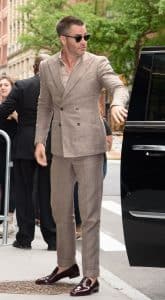
4. The Textured or Patterned Suit
The suit that adds character to the wardrobe without breaking its discipline. A subtle glen check, a fine windowpane or a soft textured cloth in navy or grey. This suit lets the director express slightly more personality in less formal executive settings, and adds visual variety to the wardrobe without loud statements. Useful for industry events, less formal client work and settings where the fully plain business suits would read as slightly too formal.
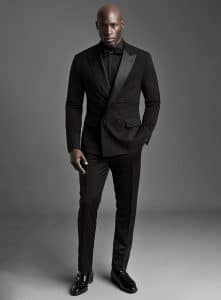
5. The Tuxedo
The formal evening wardrobe essential. A properly cut bespoke tuxedo in midnight blue or classic black, with peak or shawl lapel in silk satin. This suit serves for years of formal industry occasions, charity galas, award ceremonies, ambassadorial dinners and the specific black-tie events that punctuate a senior executive career. Every serious business leader eventually needs one, and the sooner it is added to the wardrobe the more use it gets across the years.
Explore our suit shop in Phuket to see the fabrics and construction options we work with for directors and business leaders building coordinated executive wardrobes.
The five suits above are chosen because they cover the specific occasions a director actually faces without duplication or gaps. Common additions and why they are not on the essential list.
The five essential suits do not need to arrive all at once. A sensible sequence for building the executive wardrobe from scratch is: navy first (the most versatile), mid grey second (the essential complement), charcoal third (the step up for formal daytime work), textured or patterned fourth (variety within the discipline) and tuxedo fifth (the evening formalwear essential). Each suit added extends the wardrobe’s range across specific settings without displacing what came before.
For directors whose work involves frequent international travel between offices, clients and industry events, working with the best tailor in Phuket who understands both the specific dress conventions of senior business leadership and the practical demands of executive travel is one of the more useful long-term relationships to establish.
A wardrobe of five suits worn in rotation lasts far longer than a wardrobe of three worn constantly. Wool suits benefit from resting a day between wears for the fabric to recover its shape. Proper care between wears (a wooden hanger, brushing after each wear, steaming rather than pressing) extends the life of each suit significantly. And an occasional professional press keeps the whole wardrobe looking sharp across years of use. Five suits, well made and well maintained, are the working wardrobe of most successful business leaders across a long career.
Exclusive Tailor is one of the original bespoke tailoring houses of Patong, Phuket, founded by Johnny and Nitu and run as a family business ever since. Our director and executive clients include board members, managing directors and senior business leaders from companies across the world. Many first met us during a Phuket visit and continue the relationship through our trunk show service in their home cities as they build and refine their executive wardrobes over their careers. The five-suit wardrobe of a serious business leader rewards a long relationship with a bespoke tailor, and we take that relationship seriously across every stage of a director’s professional life.
How many suits should a business leader own?
Five well chosen suits cover almost every occasion a working director faces without excess or gaps. Fewer than five leaves specific settings under-covered and does not allow proper rotation. Additional suits beyond five stop being strictly necessary for the professional wardrobe.
What are the five essential suits every business leader should own?
A navy business suit, a mid grey business suit, a charcoal formal suit, a textured or patterned suit for variety within the discipline, and a tuxedo for formal evening occasions. Together these five cover the vast majority of executive settings across almost every industry.
Which suit should I buy first?
The navy business suit. It is the most versatile piece in an executive wardrobe and works across board meetings, senior client meetings, media appearances and almost every professional setting. If you were only allowed to own one bespoke suit, this would be the one.
Do I really need a tuxedo?
For any director whose career involves industry awards, formal industry dinners, charity galas, ambassadorial events or black-tie industry occasions, yes. A properly cut bespoke tuxedo serves for many years of formal evening occasions, and the sooner it is added to the wardrobe the more use it gets.
Should all five suits be bespoke?
For a working business leader, yes. The individual fit and quality signals that define modern executive dressing are difficult to achieve at any price without bespoke construction, and the wardrobe is worn often enough for the investment to pay back across years.
How long does it take to build the five essential suits?
Most executive clients build the five over one to two years, adding pieces as budget and calendar allow. The sequence usually starts with navy, then mid grey, then charcoal, then a textured or patterned suit, with the tuxedo added when a formal occasion calls for it.


Mon-Sat 10:30 – 22:00
Sunday 16:00 – 22:00