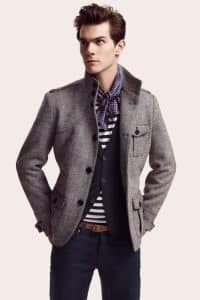
A founder’s job is unusual. In a single week, the same person might pitch venture capital, present to a board, sit for a media interview, negotiate with a partner, host a customer at the office and appear on stage at an industry event. Each of these settings has a different audience with different expectations, and each of them is reading the founder as a stand-in for the company. There is no HR department to sit between the founder and the world. The founder is the brand, and the wardrobe is one of the visible extensions of it.
This guide is about how successful founders dress. Not the caricature of the hoodie-wearing tech genius, and not the corporate uniform of the legacy CEO either. A working founder wardrobe that matches the scale of the ambition, carries a personal brand consistently across the full range of settings a founder faces, and grows with the founder as the company grows.
The most common founder mistake is treating wardrobe as either irrelevant or as a costume. The founders who dress badly early often argue that substance is what matters, which is true but incomplete. Investors, partners, journalists and prospective hires are all reading visual signals alongside the pitch, and a founder who visibly does not care about presentation is quietly telling them that other things also might not get the attention they deserve.
The founders who overcorrect often go the other way and end up looking like they are trying to pass as someone else. A hoodie founder in an expensive but poorly chosen suit at a pitch meeting looks less credible than the same founder in a well cut, less formal jacket that suits their actual identity. The point of a founder wardrobe is not to disguise the founder. It is to present the founder at their best, in a way that matches who they actually are and the level of the company they are building.
The best founder wardrobes are recognisable across occasions. The same silhouette, the same colour discipline, the same level of quality, adapted to the formality of the setting. This consistency is what turns a wardrobe into a personal brand. Investors and journalists who have met a founder several times begin to associate a particular look with that founder, and the association becomes part of how the founder is remembered.
A useful principle for founders is to dress one notch above the audience they are addressing. At a pitch meeting where investors are in suits, a founder in a well cut sport coat and tailored trousers reads correctly. At a startup event where the audience is casual, the founder in a considered jacket and quality shirt reads as the leader in the room. Dressing significantly above the room reads as trying too hard; dressing significantly below reads as not caring.
A small wardrobe of well made pieces, worn consistently, does more for a founder’s personal brand than a large wardrobe of mixed quality. Five well chosen pieces that all work together, and that all look considered, is far better than fifteen pieces that do not.
A working founder wardrobe should be built for range. The founder needs to look correct across pitch meetings, board sessions, media appearances, industry events, customer meetings and internal work, without a completely different outfit for each. A small, coordinated set of pieces solves this problem.
Explore our custom suits to see the pieces we work with for founders building coordinated separates alongside their full suits.
Founder style shifts by industry, and understanding your sector’s dress conventions matters. A fintech founder pitching institutional investors dresses more formally than a consumer tech founder pitching a Series A. A luxury brand founder dresses with more attention to detail than a b2b SaaS founder. The principle of dressing one notch above the room applies within the norms of the industry, not against them.
A founder’s wardrobe should evolve with the company. The seed-stage founder needs a small, versatile wardrobe that works across the wide range of casual and formal settings that stage demands. The Series B founder needs a slightly more considered set that reflects the company’s growing profile. The IPO-stage or exit-stage founder needs a genuine executive wardrobe that stands up to public scrutiny and formal ceremonial occasions.
This evolution is one of the reasons a bespoke relationship serves founders particularly well. The tailor grows with the founder, understanding the specific silhouette and quality standard the founder wants to be associated with, and refining the wardrobe as the company matures rather than requiring a full reset at each stage.
For founders whose company has reached the stage where the executive wardrobe becomes serious, working with a bespoke tailoring house that has built wardrobes for executives at every stage of company growth is one of the more useful long-term relationships to establish.
Exclusive Tailor is one of the original bespoke tailoring houses of Patong, Phuket, founded by Johnny and Nitu and run as a family business ever since. Our founder clients include entrepreneurs at every stage of company building, from first pitch through Series funding to IPO and exit. Many first met us during a Phuket visit and continue the relationship through our trunk show service in their home cities as the company grows. The wardrobe of an ambitious founder rewards a long relationship with a bespoke tailor who understands the evolution from seed-stage founder to public executive, and we take that evolution as seriously as the founders themselves do.
If you would like to build a founder wardrobe that matches the ambition of the company you are building, you can book a consultation at our Patong showroom or through our contact us page if you would prefer to be fitted in your home city. We work with founders at every stage of company building, from first pitch to exit.
What is founder style?
Founder style is a wardrobe consciously built to match a founder’s ambition and reinforce their personal brand across the full range of settings the role demands, from investor pitches to media appearances to internal team meetings. The best founder wardrobes are consistent, considered and slightly more formal than the audience they are addressing.
Should a founder wear a suit?
It depends on the setting and the industry. For investor pitches, board meetings and formal media appearances, yes. For internal work and less formal settings, a well cut blazer and tailored trousers often reads better than a full suit. The principle is to dress one notch above the audience.
How does founder style differ from executive style?
Executive style is typically more formal and more focused on a specific corporate context. Founder style is broader, needs to work across a wider range of settings, and evolves more visibly as the company grows. Founders often need more separates and versatile pieces than pure suits.
Can a founder wear casual clothes and still be taken seriously?
Casual is not the same as careless. A founder in a well cut casual outfit, made from quality materials, reads as considered. A founder in poorly fitting clothes reads as not caring about presentation. The point is intentionality, not formality.
How many pieces does a founder wardrobe need?
A working founder wardrobe of one or two suits, a versatile blazer, two or three pairs of tailored trousers, and a rotation of quality shirts covers most needs. Additional pieces can be added as the company grows and the founder’s public profile evolves.
Should a founder’s wardrobe change as the company grows?
Yes. The seed-stage wardrobe needs range and versatility. The mid-stage wardrobe becomes slightly more considered. The IPO or exit-stage wardrobe reflects a genuine executive presence. The evolution should feel natural rather than abrupt.


Mon-Sat 10:30 – 22:00
Sunday 16:00 – 22:00